Arizona • Independent Auditors
Blower Door Testing in Arizona
A calibrated fan measures your home's true air leakage — the number every efficiency upgrade should start from.
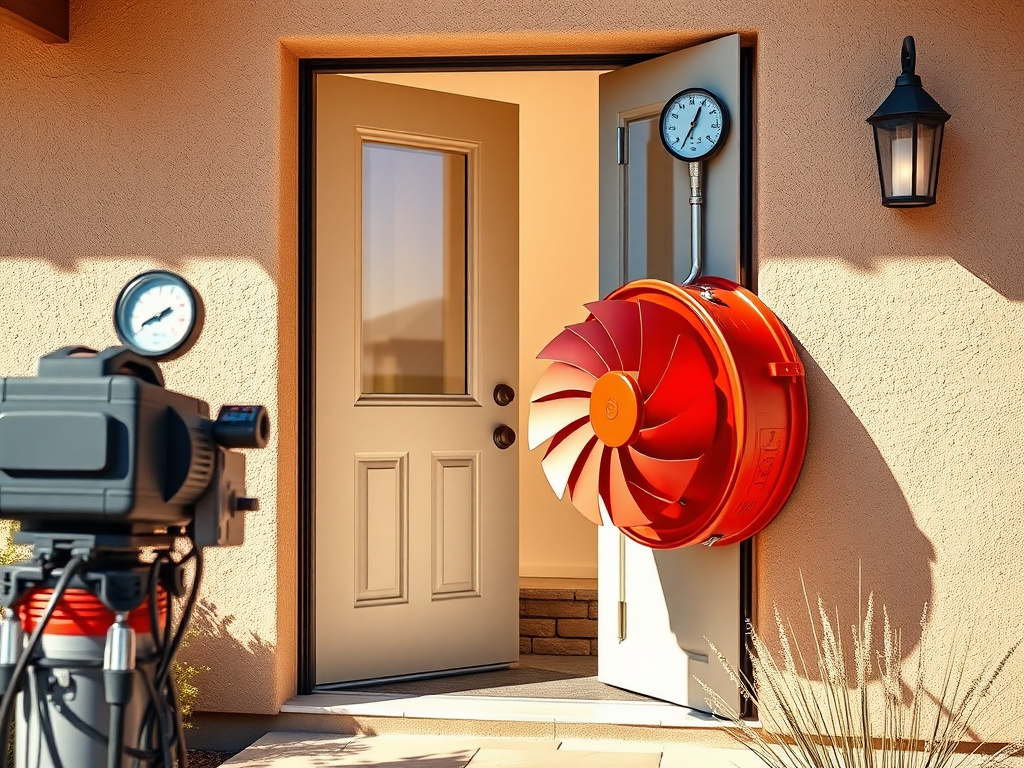
A blower door test is the foundation of every serious energy audit — the measurement that turns 'my house feels drafty' into a hard, improvable number. By sealing a calibrated fan into an exterior doorway and depressurizing your home, we measure precisely how much air leaks through your envelope. In Arizona, where every leak pulls in 110°F outdoor air and monsoon dust while letting your cooled air escape, that number is the starting line for cutting your bill.
ACH50
The Number You Get
Air changes per hour at 50 pascals — your home's leakage score.
50 Pa
Test Pressure
A controlled pressure that exposes leaks you'd never feel day to day.
$0 waste
Fix What's Measured
Air sealing guided by data, not guesswork, delivers the fastest payback.
What a Blower Door Is and How the Test Works
A blower door is a powerful, calibrated fan mounted in an adjustable panel that seals into one of your exterior doorways. We turn it on to draw air out of the house, lowering the indoor pressure relative to outside. That pressure difference forces outside air in through every crack, gap, and penetration in your envelope — and the fan tells us exactly how much air it takes to maintain the pressure, which is a direct measure of how leaky your home is.
The standard result is ACH50: air changes per hour at 50 pascals of pressure. A low number means a tight house; a high number means a leaky one. We also read CFM50, the raw airflow, which helps size the leakage against your home's volume. The whole test takes under an hour and is completely non-destructive.
Why Air Leakage Costs So Much in Arizona
In a mild climate, a leaky house is mostly a comfort problem. In the Sonoran Desert, it's a financial one. When it's 110°F outside and your AC is fighting to hold 78°F inside, every cubic foot of leaked air is a cubic foot of superheated desert air your system has to cool from scratch — over and over, all day.
Air leakage also brings monsoon dust and humidity indoors, adds latent load your AC must remove, and undermines even a brand-new, high-efficiency air conditioner. You can't insulate your way out of a leaky envelope; the air simply goes around the insulation. Sealing the leaks the blower door finds is almost always the cheapest, highest-return efficiency work available.
Where Arizona Homes Leak Most
Leaks aren't random — they cluster in predictable places, and we pair the blower door with a thermal camera and a smoke pencil to pinpoint them while the fan is running. In Valley homes, the usual suspects are consistent.
- Top plates — the gaps where interior walls meet the attic, a major hidden leakage path.
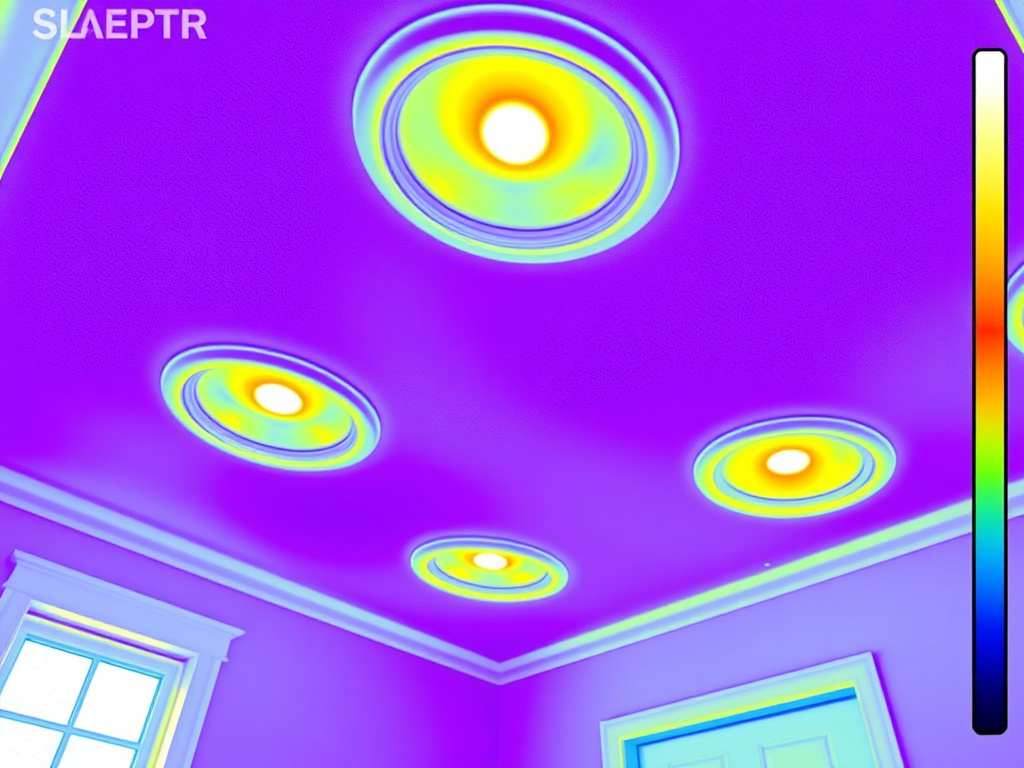
- Recessed 'can' lights — older non-airtight fixtures act like small chimneys into the attic.
- Attic access hatches — usually uninsulated and unsealed, leaking around the entire perimeter.
- Plumbing and wiring penetrations — every pipe and cable through the ceiling plane is a potential gap.
- Duct chases and register boots — openings around ductwork where it passes through walls and ceilings.
- Block-wall to frame transitions — in 1970s homes, the junction between CMU walls and framed roofs.
Reading Your Numbers
A blower-door result only means something in context, so we interpret yours against benchmarks for your home's age and construction. Tight modern construction can test around 3 ACH50 or lower; a typical older Arizona home might come in two to three times leakier. We don't just hand you a number — we explain what it means for your bills and how much of it is realistically fixable.
The real power of the test is that it's repeatable. After air-sealing work, we can run the blower door again and measure the improvement, giving you verified proof that the money you spent actually tightened the house. That before-and-after is also exactly what utility rebate programs want to see.
Pairing the Blower Door With Thermal Imaging
The blower door tells you how much air is leaking; the thermal camera tells you where. Run together, they're far more powerful than either alone. With the house depressurized, incoming air streams cool (or warm) surfaces near each leak, and the infrared camera lights those paths up instantly — a technique called a pressurized thermal scan.
This combination is how we produce a leak map rather than a leak estimate. Instead of 'your house is leaky,' you get 'here are the eleven specific locations, ranked by size, that account for most of your leakage.' That precision is what makes the follow-up air-sealing fast, targeted, and cost-effective.
How Blower-Door Results Support Rebates
Both APS and SRP tie meaningful air-sealing and insulation rebates to documented, professional testing, and a blower-door measurement is central to that documentation. A tested 'before' number, the sealing work, and a tested 'after' number form the evidence trail these programs require.
We prepare that documentation as part of the test so you're positioned to claim everything you qualify for. Rebate amounts change year to year, so we confirm the current APS and SRP offers for your address and always direct you to the utility's own page for the live figures.
Common Questions
Blower Door Testing FAQs
Straight answers from an independent auditor. More on our full FAQ page.
Have a different question? Read all 28 FAQs or see our 2026 Arizona energy audit guide.
Related Services
You Might Also Need
Thermal Imaging
The camera shows what the eye can't — insulation voids, duct leaks, and moisture, in vivid false color.
Whole-Home Energy Audit
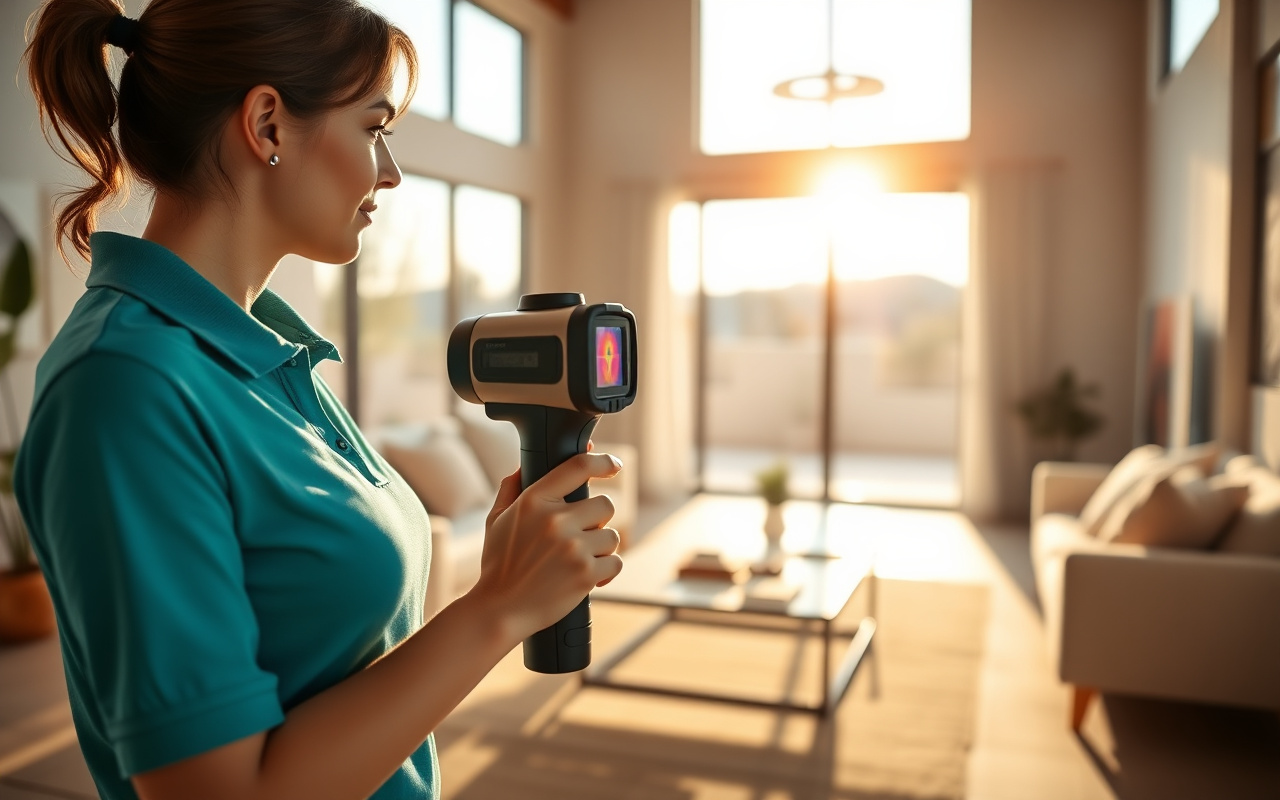
The complete diagnosis — blower door, thermal camera, and duct testing in one visit, with a prioritized fix-it roadmap.
Insulation Assessment
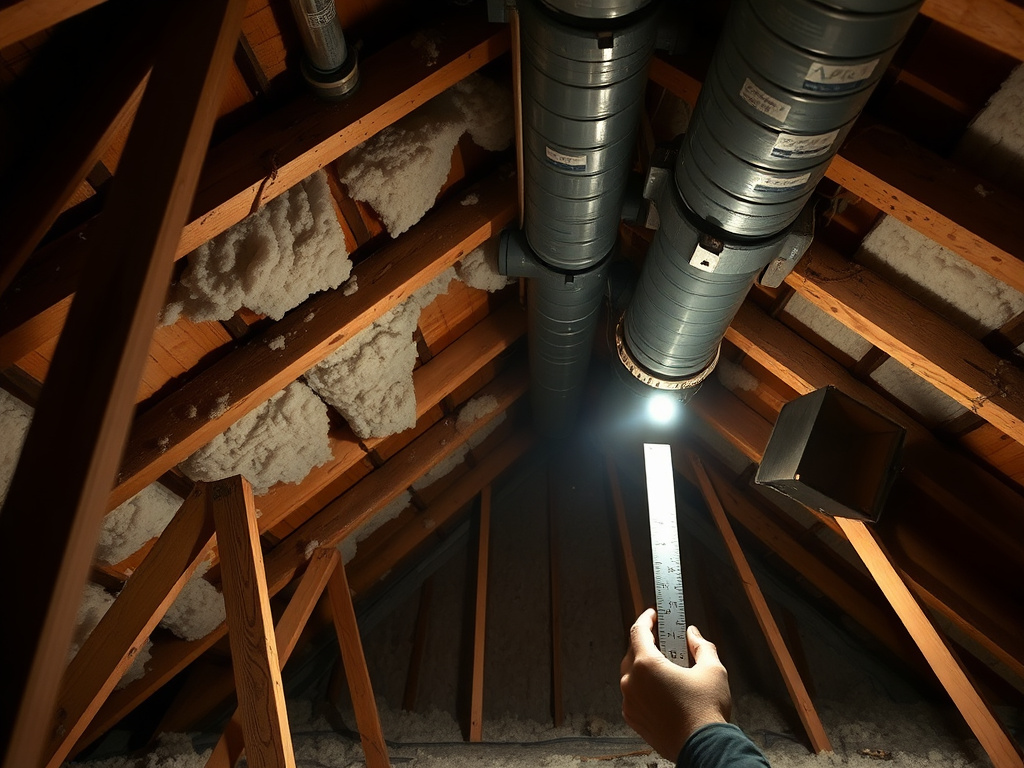
We measure what you actually have — attic depth, block-wall gaps, and the R-value you're really getting.
Ready to Find Out Why Your Bill Is So High?
Book an independent energy audit for your Arizona home or business. We measure exactly where your money is going — and hand you a prioritized plan to stop it.