Arizona • Independent Auditors
Whole-Home Energy Audit in Arizona
The complete diagnosis — blower door, thermal camera, and duct testing in one visit, with a prioritized fix-it roadmap.
A whole-home energy audit is the complete diagnosis of why your Arizona home costs what it costs to keep comfortable. In a single visit we bring the full instrument kit — a calibrated blower door, an infrared thermal camera, and a duct-leakage rig — and turn a vague sense that 'the bills are too high' into a precise, prioritized map of where your money is escaping. It is the one step that makes every other upgrade smarter, because it tells you exactly what to fix, in what order, for the best return.
2–3 hrs
On-Site Diagnosis
A full instrument-based assessment of every major system.
15–30%
Typical Cooling Savings
Once the audit's top priority fixes are completed.
6
Systems Tested
Envelope, ducts, insulation, HVAC sizing, combustion, and rate plan.
What a Whole-Home Energy Audit Actually Is
Most homeowners in the Valley reach for a solution before they have a diagnosis — a bigger AC, more attic insulation, new windows — and often spend thousands solving a problem they don't actually have. A whole-home energy audit reverses that order. It is a systematic, measurement-driven investigation of how your home gains heat, loses conditioned air, and uses energy, performed with the same instruments a utility or a building scientist would use.
The goal is not to sell you a product. It is to hand you a clear, ranked list of what is costing you money and what each fix is worth. Because we are an independent auditor and not an insulation or HVAC installer, nothing in your report is steered toward a particular product line. When you decide to act, the report is contractor-ready and doubles as your rebate and tax-credit paperwork.
For an Arizona home, this matters more than almost anywhere else in the country. Cooling can account for half or more of your annual electric bill, and the punishing summer means small envelope and duct defects translate into large, recurring costs. The audit finds them.
The Six-Instrument Diagnostic
A complete audit is a sequence of tests, each answering a different question about your home. Individually they are useful; together they cross-check one another and reveal the full picture.
- Blower-door test — a calibrated fan measures whole-house air leakage as ACH50, quantifying exactly how leaky your envelope is.
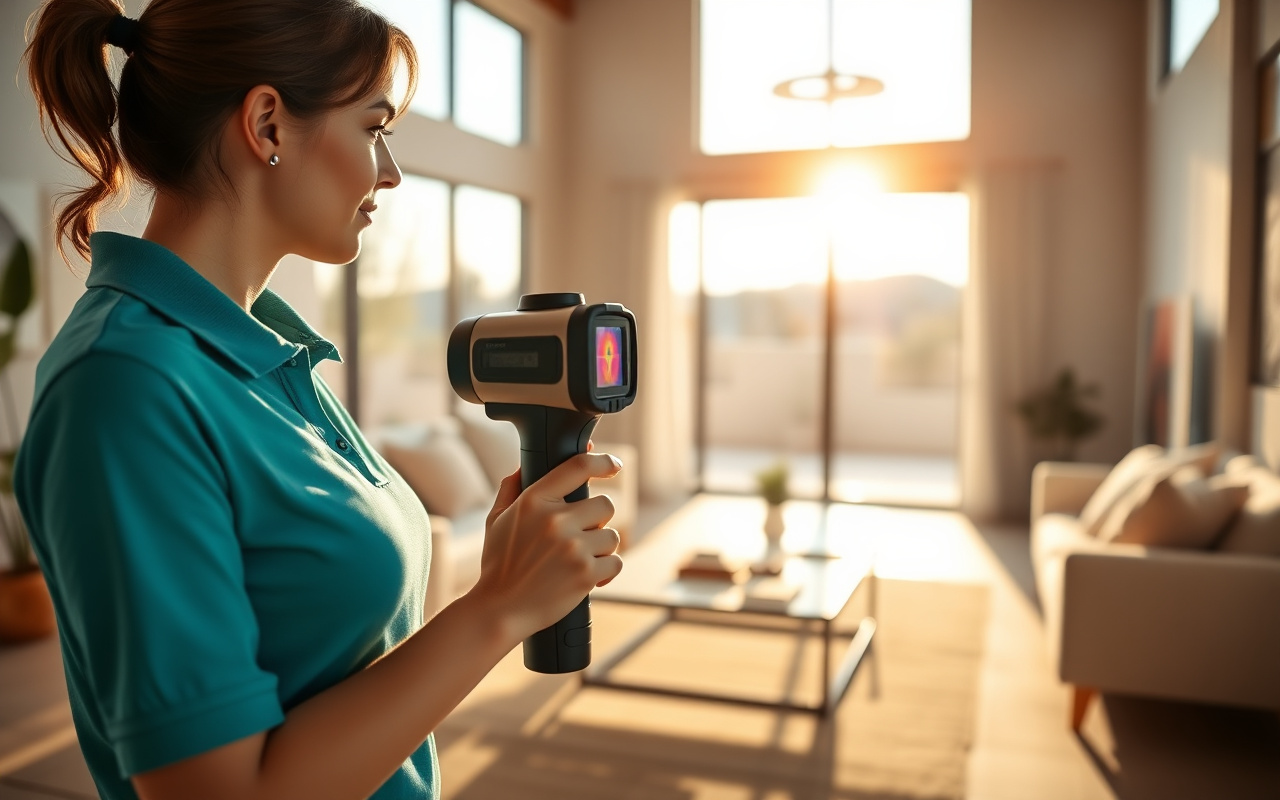
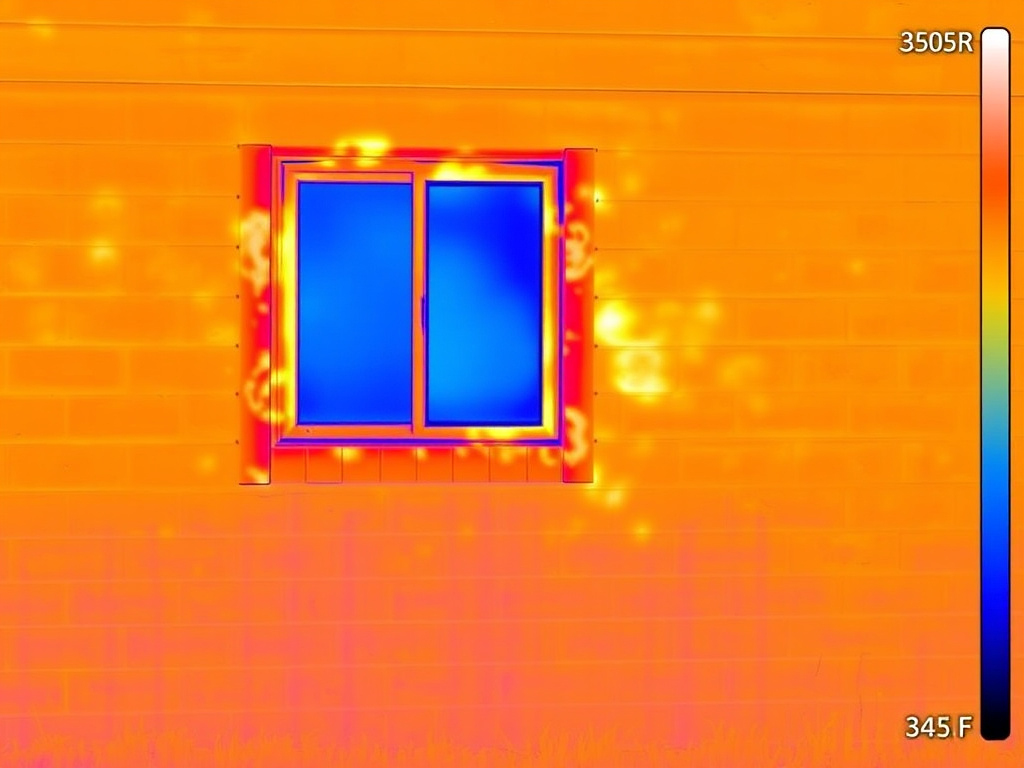
- Infrared thermal imaging — a scan of ceilings, walls, and ductwork that locates insulation voids, air leaks, and duct losses as vivid temperature patterns.
- Duct leakage testing — a pressurized measurement (CFM25) of how much cooled air your ducts lose, often into a 150°F attic.
- Insulation and R-value assessment — direct measurement of depth, coverage, and effective R-value against Climate Zone 2B targets.
- HVAC sizing and rate-plan review — a check of whether your system is right-sized (Manual J) and whether your APS or SRP plan fits your usage pattern.
- Combustion safety check — where gas appliances are present, verification of safe draft and no backdrafting.
The Arizona-Specific Problems We Find
Every climate has its signature failure modes, and the Sonoran Desert has a distinctive set. Because our auditors work exclusively in Arizona, we know exactly where to look and what the numbers should be.
The single most common — and most expensive — discovery is leaky ductwork running through an unconditioned attic. On a 110°F afternoon that attic can hit 150–160°F, and every gap in the ducts dumps air you paid to cool into that oven while pulling superheated attic air back into your system. We routinely measure duct leakage of 20–30% in older homes, meaning up to a third of your cooling never reaches your rooms.
Close behind are under-insulated and gapped attics, uninsulated concrete-block walls in 1970s-era homes, air leakage at top plates and recessed lights, and oversized air conditioners that short-cycle without ever dehumidifying. The audit tells you which of these is dominant in your specific home, so you don't guess.
Your Report and Priority Roadmap
The deliverable is a written report you own, built to be acted on. Every finding is ranked by three numbers: what it costs to fix, what it saves per year, and how quickly it pays back. That lets you fund the work in order of return — usually starting with duct sealing and air sealing, which are inexpensive and high-impact, before moving to insulation and, eventually, equipment.
We walk you through the biggest findings before we leave, so you never have to wait for the paperwork to understand your home. The full report follows shortly after, complete with thermal images that show precisely where the problems are.
Rebate and Tax-Credit Qualification
The audit is also the key that unlocks money back. Both APS and SRP tie their largest efficiency rebates — for duct sealing, air sealing, and insulation — to a professional assessment, which is exactly what your audit provides. On top of that, a qualifying home energy audit is eligible for the federal 25C tax credit, historically up to $150, and the improvements it recommends carry their own additional credits.
We document everything to the standard these programs require and map out which rebates your specific home and planned fixes qualify for. Because program amounts change annually, we verify the current APS and SRP offers for your address at the time of your audit, and we always point you to the utility's own page to confirm the live figures.
Return on Investment: The Math That Makes It Obvious
Consider a typical Valley home spending $400 a month cooling in the summer. If the audit finds and you fix duct leakage and air-sealing issues that cut cooling load 20%, that's roughly $80 a month during the five hottest months and meaningful savings year-round — often $500 or more annually, every year, for a one-time set of fixes.
Against an audit that costs a few hundred dollars (before the tax credit), the payback is measured in a single cooling season. And unlike buying a bigger AC, the savings compound: a tighter, better-insulated home costs less to cool for the entire time you own it, and it's a genuine selling point at resale.
What Happens After You Book
Scheduling is simple. You tell us your home's size, age, and the symptoms you're seeing — hot rooms, a bill that keeps climbing, dust you can't explain — and we arrange a visit at a time that works. Spring and fall are ideal for scheduling the fixes ahead of peak season, but a summer audit is extraordinarily revealing because the heat makes every defect show up brightly on the thermal camera.
From there, the process is diagnosis, report, and a clear set of next steps. No pressure, no product pitch — just the information you need to stop overpaying to cool the desert.
Common Questions
Whole-Home Energy Audit FAQs
Straight answers from an independent auditor. More on our full FAQ page.
Have a different question? Read all 28 FAQs or see our 2026 Arizona energy audit guide.
Related Services
You Might Also Need
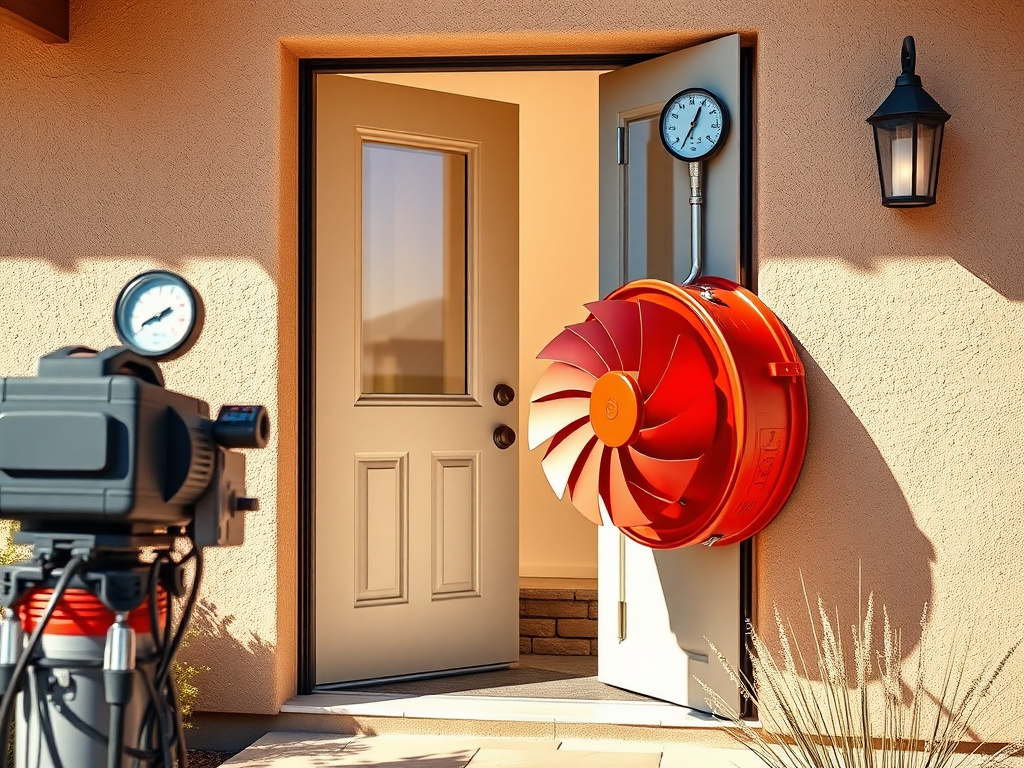
Blower Door Testing
A calibrated fan measures your home's true air leakage — the number every efficiency upgrade should start from.
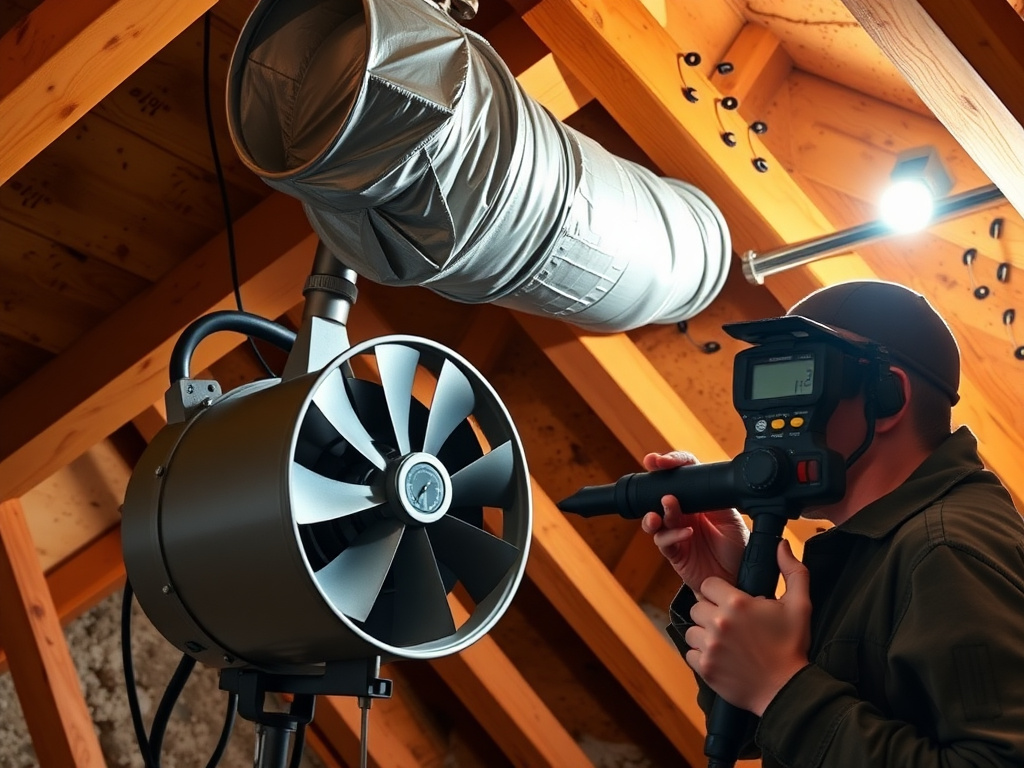
Duct Leakage Testing
Arizona attic ducts commonly leak 20–30% of your cooled air. We measure exactly how much — and where.

APS/SRP Rebates
Your audit is the paperwork that unlocks utility rebates and tax credits — we map every dollar you qualify for.
Ready to Find Out Why Your Bill Is So High?
Book an independent energy audit for your Arizona home or business. We measure exactly where your money is going — and hand you a prioritized plan to stop it.